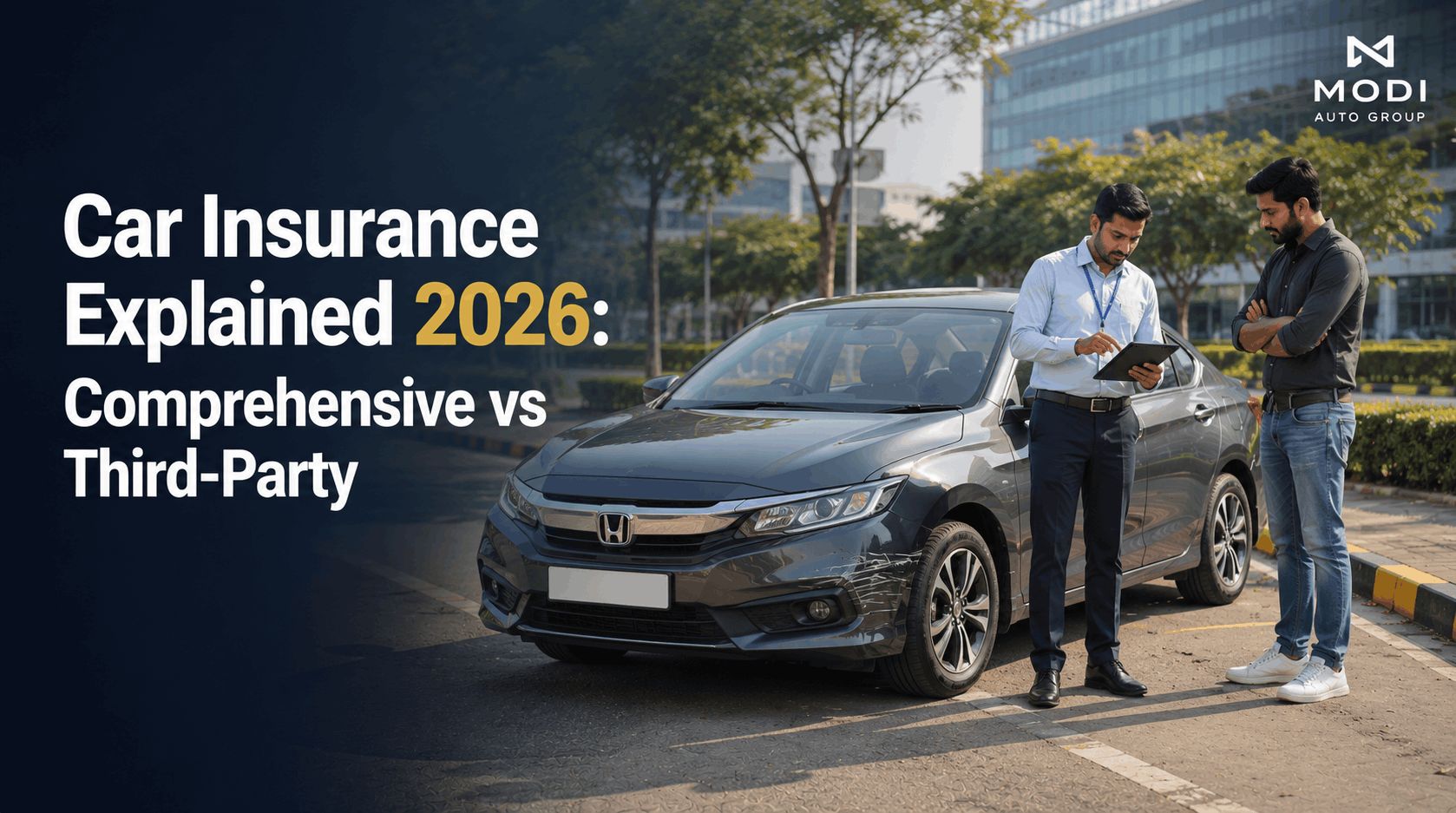
Car Insurance Explained 2026: Comprehensive vs Third-Party
Buying a car in India is exciting. Sorting out its insurance? Not so much. The jargon alone can put you off: IDV, NCB, zero dep, own-damage, third-party liability. But here’s the thing, once you understand a few basics, picking the right cover becomes surprisingly simple.
If you’re renewing an old policy or insuring a brand-new car in 2026, this guide walks you through everything you actually need to know. We’ll break down the comprehensive vs third party insurance debate in plain language, so you can decide what fits your car, your driving, and your budget.
Why does your car even need insurance?
Two reasons, really. One is legal, the other is practical.
By law, every car on an Indian road must have at least third-party insurance. This comes from the Motor Vehicles Act, and driving without it can land you a fine, or worse. So this part isn’t optional.
The practical reason is your own peace of mind. A single accident, a stolen car, or a flooded engine during the Mumbai monsoon can cost you lakhs. Insurance is what stands between a bad day and a financial disaster.
Picking your top SUV under 20 lakh is the fun part. Buying it shouldn’t be painful.
Also Read:
Modi Auto Group
we are an authorised dealership for Hyundai, Honda, MG, and Kia across Mumbai and Pune. Whether your shortlist has the Creta, Seltos, Elevate, Hector, or any other SUV from this list, our team can line up test drives, walk you through variants honestly, and help you land the right deal. No pressure, no upselling — just straight talk.
What are the types of vehicle insurance in India?
There are really three main kinds of car insurance policies you’ll come across. Let’s keep it simple.
Third-party liability cover
This is the bare minimum the law asks for. “Third party” means someone other than you and your insurer, so another person, their car, or their property.
If you hit someone’s vehicle or injure a pedestrian, this policy pays for their losses. What it does *not* do is pay for damage to your own car. If your bumper is smashed in the same accident, that repair comes out of your pocket.
Standalone own-damage cover
This one flips it around. It covers damage to *your* car, from accidents, theft, fire, natural disasters, and so on, but not third-party liability.
You usually buy this only if you already hold a separate third-party policy. It became popular after regulators allowed people to buy the two covers separately.
Comprehensive cover
This is third-party and own-damage rolled into one. It protects other people’s losses *and* your own car. Most people who want full protection go for this, and it’s where add-ons like zero dep cover come in (more on that shortly).
So when someone talks about the type of vehicle insurance in India, they usually mean one of these three.
What is IDV, and why should you care?
IDV stands for Insured Declared Value. Think of it as the current market value of your car, the maximum amount your insurer will pay if the car is stolen or damaged beyond repair.
Here’s what trips people up. A higher IDV means a slightly higher premium, but it also means a bigger payout when you need it. Some buyers lower their IDV just to save a few hundred rupees, then feel shortchanged at claim time. Set your IDV close to the real value of your car, not artificially low.
As your car ages, its IDV drops, which is one reason older cars cost less to insure.
Comprehensive vs third party insurance: a side-by-side look
Sometimes a table says it better than paragraphs. Here’s how the two stack up.
| Feature | Third-Party Only | Comprehensive |
|---|---|---|
| Damage to others’ car/property | Covered | Covered |
| Injury to third parties | Covered | Covered |
| Damage to your own car | Not covered | Covered |
| Theft, fire, natural disaster | Not covered | Covered |
| Add-ons like zero dep | Not available | Available |
| Cost | Lower premium | Higher premium |
| Legally valid on its own | Yes | Yes |
| Who it suits | Very old cars, tight budgets, low usage | New cars, daily drivers, loan-financed cars |
Short version? Third-party keeps you legal and covers others. Comprehensive covers you too. If your car is new or you drive it a lot, comprehensive usually makes more sense.
The add-ons worth knowing about
A comprehensive policy is good on its own, but add-ons (also called riders) make it stronger. You pay a little extra for each. A few are genuinely useful.
- Zero depreciation (zero dep) cover: Normally, when your car is repaired, the insurer deducts for the wear and tear of parts like bumpers, plastics, and rubber. Zero dep waives that deduction, so you get the full claim without depreciation cut. For new and premium cars, this one is almost a must-have.
- Engine protection cover: Your standard policy often won’t pay for engine damage caused by water entering the engine, a real risk during heavy Mumbai rains. This add-on plugs that gap.
- Roadside assistance: Flat tyre, dead battery, or a breakdown on the highway at night? This gets you help, towing, and minor fixes on the spot.
- Return to invoice: If your car is stolen or totalled, this pays you the full invoice price you originally paid, not just the depreciated IDV. That difference can be significant on a newer car.
You don’t need every add-on. Pick the ones that match your car’s age and how you drive.
Also Read: Multi-Brand Car Showroom: Why Buying Under One Roof Makes Sense?
What is No Claim Bonus (NCB)?
NCB is a reward for careful driving. For every year you don’t make a claim, your insurer gives you a discount on your next own-damage premium. It starts modest and can climb to a hefty discount after several claim-free years.
The catch? Make even one small claim, and your NCB resets. So for tiny dents, it’s often smarter to pay out of pocket and protect your bonus. NCB also transfers to your new car if you sell and upgrade, which many owners forget to claim.
What affects your yearly car insurance cost in India?
There’s no single sticker price for car insurance. Your yearly car insurance cost in India depends on a mix of things:
- Your car’s make, model, and age — a bigger engine or a luxury badge costs more to insure.
- Your city — dense metros like Mumbai often carry higher premiums than smaller towns.
- IDV — higher declared value, higher premium.
- Add-ons chosen — zero dep and engine cover add to the bill.
- Your NCB — a good claim-free record pulls the cost down nicely.
- Type of policy — third-party is cheaper, comprehensive costs more but covers more.
Because these factors vary so much, nobody can quote you one “correct” figure. The only reliable way to know your number is to get quotes for your specific car and compare them.
How do you keep the premium reasonable?
- Compare quotes from a few insurers before renewing, don’t just auto-renew.
- Protect your NCB by avoiding small claims.
- Set a sensible IDV, not an artificially low one.
- Skip add-ons you genuinely won’t use.
- Bundle only what’s relevant to your car’s age and your driving.
If all this feels like a lot to juggle, you don’t have to do it alone. A good dealership can walk you through the options. The teams across the Modi Auto Group dealerships in Mumbai regularly help buyers understand their cover, arrange fresh policies and renewals, and even guide them through claims when the time comes. As the group behind a multi-brand car showroom in Mumbai network, Modi Auto Group makes cover, renewals and claims simpler to handle.
Key takeaways
- Third-party insurance is legally mandatory; comprehensive is optional but far more protective.
- Comprehensive covers your own car too, and supports add-ons like zero dep.
- IDV is your car’s insured value, set it realistically.
- Zero dep cover saves you from depreciation cuts at claim time; great for newer cars.
- NCB rewards claim-free years with real discounts, so guard it.
- Premiums vary by car, city, and IDV, always compare quotes instead of assuming a fixed price.
Whether you go third-party or full comprehensive, the right choice is the one that matches your car and your peace of mind. Take a few minutes to understand what you’re buying. Future-you, standing at a repair shop, will be glad you did.
Frequently Asked Questions
1. Is third-party insurance enough for my car?
It’s enough to stay legal, but not enough to protect your own car. If your vehicle is old, low-value, or barely driven, third-party may do. For a new or frequently used car, it leaves you exposed to big repair and theft costs.
2. Is zero dep cover worth the extra money?
For cars under five years old, and especially premium models, yes. Zero dep means no depreciation is deducted from your claim, so your payout is fuller. On very old cars, the benefit shrinks and it may not be worth it.
3. How is a car insurance premium calculated?
Insurers look at your car’s IDV, make, model, age, your city, the policy type, chosen add-ons, and your NCB. Each insurer weighs these slightly differently, which is why the same car can get different quotes.
4. What exactly is NCB?
No Claim Bonus is a discount you earn for every claim-free year. It grows over time and reduces your own-damage premium. Make a claim, though, and it resets to zero, so small dents are often better paid yourself.
5. Comprehensive vs third party, which should I choose?
If your car is new, financed, or driven daily, go comprehensive for fuller protection. If it’s very old or rarely used and budget is tight, third-party keeps you legal. Match the cover to your car’s value and your usage.