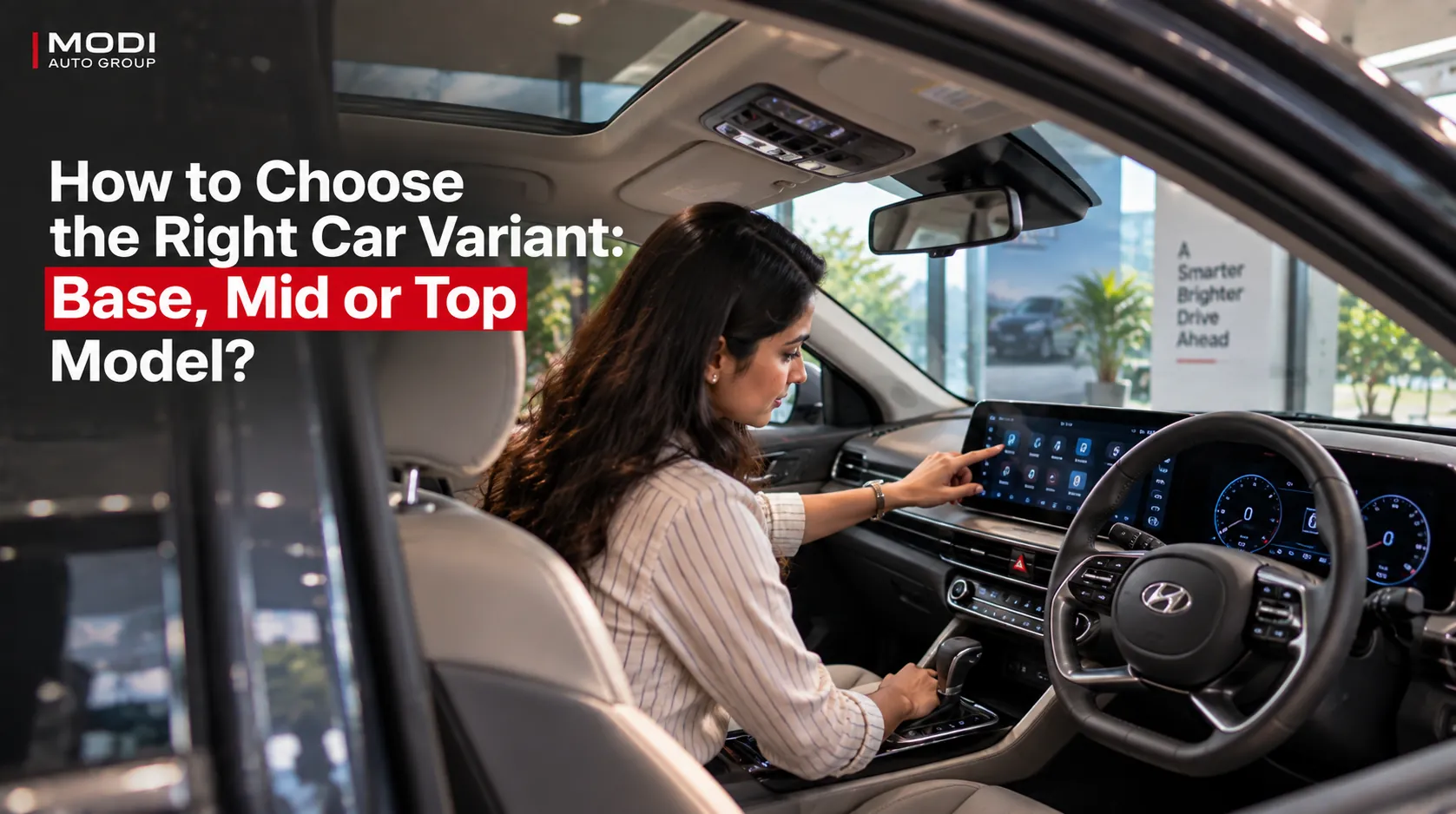
How to Choose the Right Car Variant: Base, Mid or Top Model?
How to decide which car to buy usually gets settled at the model stage, but once you’ve picked it, a second decision quietly follows: which variant. The difference between base, mid and top-spec trims of the same car can run into a couple of lakh rupees, and it’s easy to either overspend on features you’ll rarely use or underspend and miss something that would have mattered daily.
What typically separates the variants
A base model vs top model car comparison usually comes down to a couple of lakh rupees and a long list of features you may or may not use. Across most manufacturers, the pattern is fairly consistent:
- Base variant covers the essentials: safety features required by regulation, basic infotainment, and manual adjustments throughout.
- Mid variant usually adds touchscreen infotainment, additional airbags, alloy wheels, and some convenience features like keyless entry.
- Top variant brings in the full feature set: sunroof, advanced safety tech, premium upholstery, connected car features, and the highest trim finishes.
The exact features per tier vary by manufacturer and model, so it’s worth checking the specific variant comparison sheet for the car you’re considering rather than assuming based on another model.
Deciding what you’ll actually use
If you’re still working out how to pick your first car, resist the urge to max out the trim level just because you can. The most useful question isn’t “what does the top variant include,” it’s “what will I actually use every day.” A sunroof that looks great in the showroom might go unused if you’re mostly driving in city traffic. Reverse parking sensors and additional airbags, on the other hand, are safety features that matter regardless of how you use the car. Separating “genuinely useful for how I drive” from “nice to have” narrows the decision considerably.
Where the value gap tends to be largest
The jump from base to mid variant often includes safety features and convenience upgrades that are worth the extra cost for most buyers: this is typically where the best value sits. Sales teams at most car dealerships, including Modi Auto Group, can walk you through this comparison variant by variant. If you haven’t settled on a model yet, it helps to work through how to shortlist a car in three steps before you get into variant-level trade-offs. The jump from mid to top variant tends to be more about aesthetics, comfort and premium touches, which is where it’s worth being honest with yourself about whether you’ll use them enough to justify the price difference.
A quick way to decide
- List the three features you’d genuinely miss if you didn’t have them.
- Check which variant is the lowest one that includes all three.
- Treat everything above that variant as optional, not necessary.
This keeps the decision anchored to your actual needs rather than what looks most impressive on the showroom floor.
Conclusion
There’s no universally “right” variant: only the one that includes what you’ll actually use without paying extra for what you won’t. Compare the variant sheet feature by feature, be honest about your daily use case, and let that decide the trim, rather than the other way around.
Modi Auto Group’s brand showrooms across Mumbai (Viva Honda, Modi Hyundai and MG Modi) can walk you through the full variant comparison for any model, so you can see exactly what each tier adds before deciding.
Frequently Asked Questions
1. How do I decide between base, mid and top car variants?
List the features you’d genuinely use daily, then pick the lowest variant that includes all of them. Treat anything above that as optional rather than necessary.
2. What’s usually the best value variant to buy?
The jump from base to mid variant often includes meaningful safety and convenience upgrades at a relatively modest price increase, making it the sweet spot for many buyers.
3. Is the top variant worth the extra cost?
It depends on whether you’ll genuinely use the additional features, like a sunroof or premium upholstery, regularly. If not, a mid variant may offer better value for your budget.
4. Do all car models have the same variant features?
No. The exact features included at each trim level vary by manufacturer and model, so it’s important to check the specific variant sheet for the car you’re considering.
5. Should I choose a variant based on resale value?
It can be a factor: mid variants often have wider resale demand than base variants, but daily usability and safety features should still be the primary deciding factors.
6. Does variant choice affect how to pick a car color?
Not directly. Colour is usually a separate choice from trim level, though top variants sometimes limit colour options to a shorter list of premium shades.