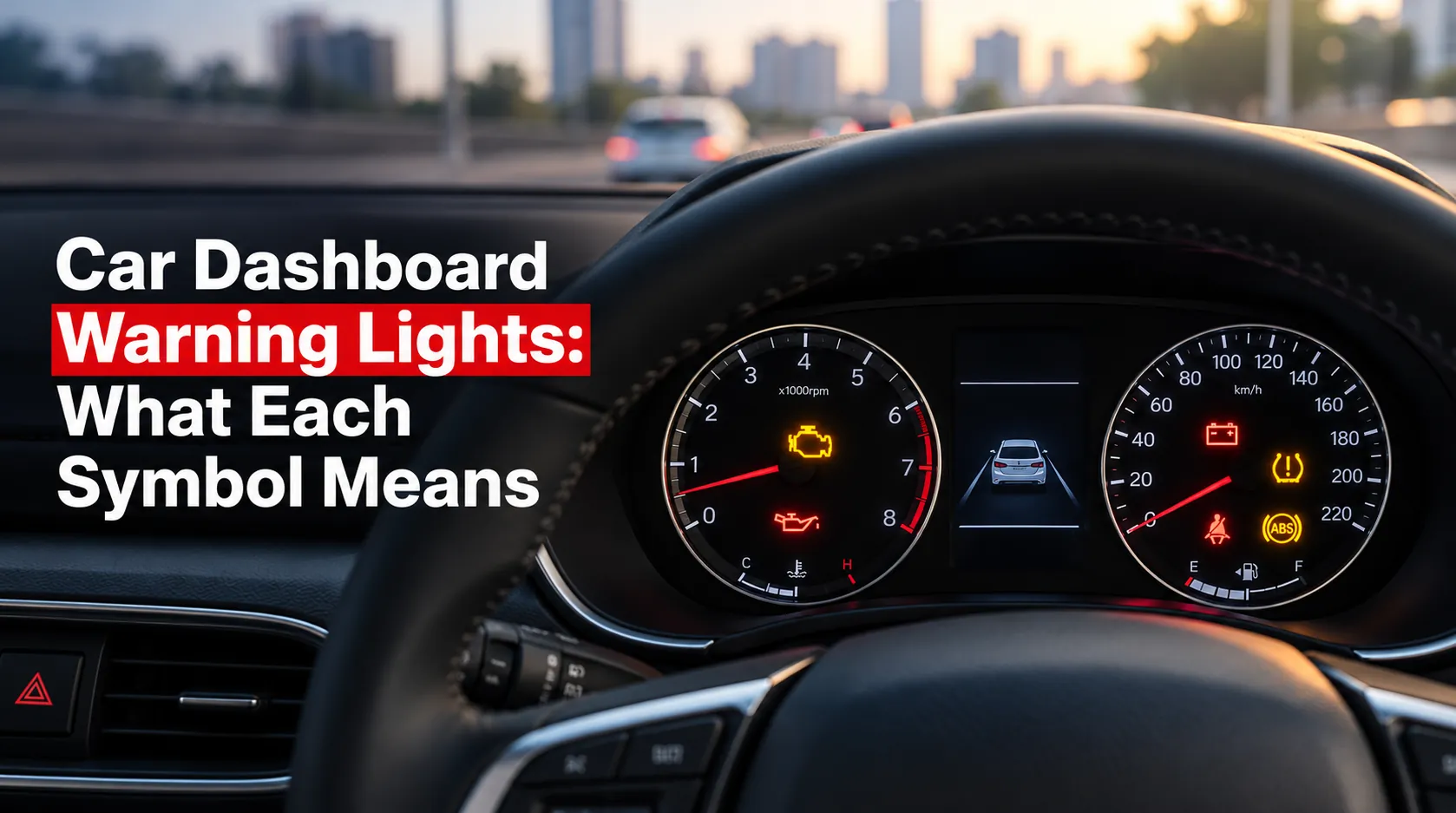
Car Dashboard Warning Lights: What Each Symbol Means
A small amber icon flickers on during the morning crawl along the Western Express Highway. The car feels normal, the music is still playing, and the obvious question follows: is it safe to keep going? Sometimes it is. Sometimes that light is the only warning you get before an expensive repair.
The good news is that car warning light symbols follow a fairly consistent logic across brands. Once you understand the colour code and the handful of symbols that matter most, the dashboard stops being a puzzle. Here are the most common symbols and what they mean.
1. Start With the Colour
Before you work out what the symbol is, look at its colour. Most manufacturers use the same three-level system:
- Red: a serious problem or safety risk. Stop as soon as it is safe to do so.
- Amber or yellow: something needs attention soon. You can usually drive carefully to a workshop.
- Green or blue: information only, such as headlamps or cruise control being switched on.
2. Red Warning Lights: Stop as Soon as It Is Safe
Engine oil pressure
Shaped like an old-fashioned oil can. It means oil pressure has dropped, which can damage the engine within minutes. Pull over, switch off and check the oil level. Do not restart the engine if the light stays on.
Engine temperature
A thermometer dipped in liquid. The engine is overheating. Switch off the AC, pull over safely and let it cool before checking coolant. Never open a hot radiator cap.
Brake system
Usually a circle with an exclamation mark, or the word BRAKE. First check that the parking brake is fully released. If it is, the brake fluid may be low or there may be a fault, and the car should be inspected before you drive further.
Battery or charging
A battery symbol. It usually points to the alternator not charging the battery, so the car is running on stored power that will eventually run out. Head straight to a workshop and avoid switching off until you get there.
Airbag (SRS)
A seated figure with a circle in front. It indicates a fault in the airbag system, which means the airbags may not deploy in a collision. Get it checked promptly.
3. Amber Warning Lights: Get It Checked Soon
Check engine light
The engine-shaped car engine warning light is the one drivers worry about most. A steady light means the engine management system has logged a fault, ranging from a loose fuel cap to a failing sensor. A flashing check engine light is more serious: it usually signals a misfire that can damage the catalytic converter, so reduce speed and get the car inspected immediately.
ABS
The letters ABS in a circle. Normal braking still works, but the anti-lock function may not, which matters most on wet monsoon roads.
Tyre pressure (TPMS)
A horseshoe shape with an exclamation mark. One or more tyres are below the recommended pressure. Check and inflate them at the next opportunity, and look for punctures if one tyre keeps losing air.
Traction or stability control
A car with wavy lines behind it. If it flashes briefly while driving, the system is simply working. If it stays on, the system may be switched off or faulty.
Power steering
A steering wheel with an exclamation mark, shown in amber or red depending on the brand. Steering may feel much heavier, so drive gently and have it checked.
Diesel-specific lights
Diesel cars add a coil-shaped glow plug light and, on BS6 models, a diesel particulate filter (DPF) warning. A DPF light often means the filter needs a longer, steady drive to clean itself, something short city trips rarely allow.
4. Green and Blue Indicator Lights
These simply confirm that a function is active: the blue high-beam symbol, green turn indicators, fog lamps, cruise control or eco mode. No action is needed unless one stays on when it should not.
5. What to Do When a Dashboard Warning Light Comes On
- Note the colour, and whether the light is steady or flashing.
- Check the owner’s manual, because some dashboard warning lights vary by brand and model.
- Do not ignore a light that disappears and comes back. Intermittent faults rarely fix themselves.
- Get a proper diagnostic scan at an authorised workshop rather than guessing.
Most authorised car dealerships can read the stored fault code in minutes, which tells the technician exactly where to look. Through Modi Auto Group, you can book a car service with the relevant brand workshop if a light needs a closer look.
6. The Startup Check Most Drivers Ignore
When you turn on the ignition, most warning lights illuminate for a second or two as a self-test, then switch off. If one stays lit after the engine starts, that is your cue to act. It is also one of the checks worth doing on delivery day, as covered in our pre-delivery inspection checklist.
Also Read: Comprehensive vs Third-Party Car Insurance: Which Should You Buy?
Conclusion
The colour tells you how urgent a warning is, and the symbol tells you where the problem lies. Red means stop, amber means book a check soon, and green or blue is simply information. Treat a flashing check engine light, low oil pressure or overheating as reasons to pull over, not things to monitor on the way home.
For diagnostics and servicing, Modi Auto Group’s brand workshops, including Viva Honda, Modi Hyundai and MG Modi, can check what a warning light means for your specific model.
Frequently Asked Questions
1. What do the colours of car dashboard warning lights mean?
Red signals a serious issue that needs you to stop safely. Amber or yellow means a check is needed soon. Green and blue lights show that a feature is switched on.
2. Can I drive with the check engine light on?
If it is steady and the car drives normally, you can usually drive carefully to a workshop. If it is flashing, reduce speed and get the car inspected immediately to avoid engine or catalytic converter damage.
3. Which car warning light is the most serious?
Low oil pressure, engine overheating and brake system warnings are among the most serious, because continuing to drive can cause major damage or affect safety.
4. Why do all the warning lights come on when I start the car?
It is a normal self-test. The lights should go off within a few seconds of the engine starting. Any light that stays on needs attention.
5. Are dashboard warning light symbols the same in every car?
The main symbols are broadly standard, but some vary by manufacturer, so the owner’s manual is the best reference for your car.