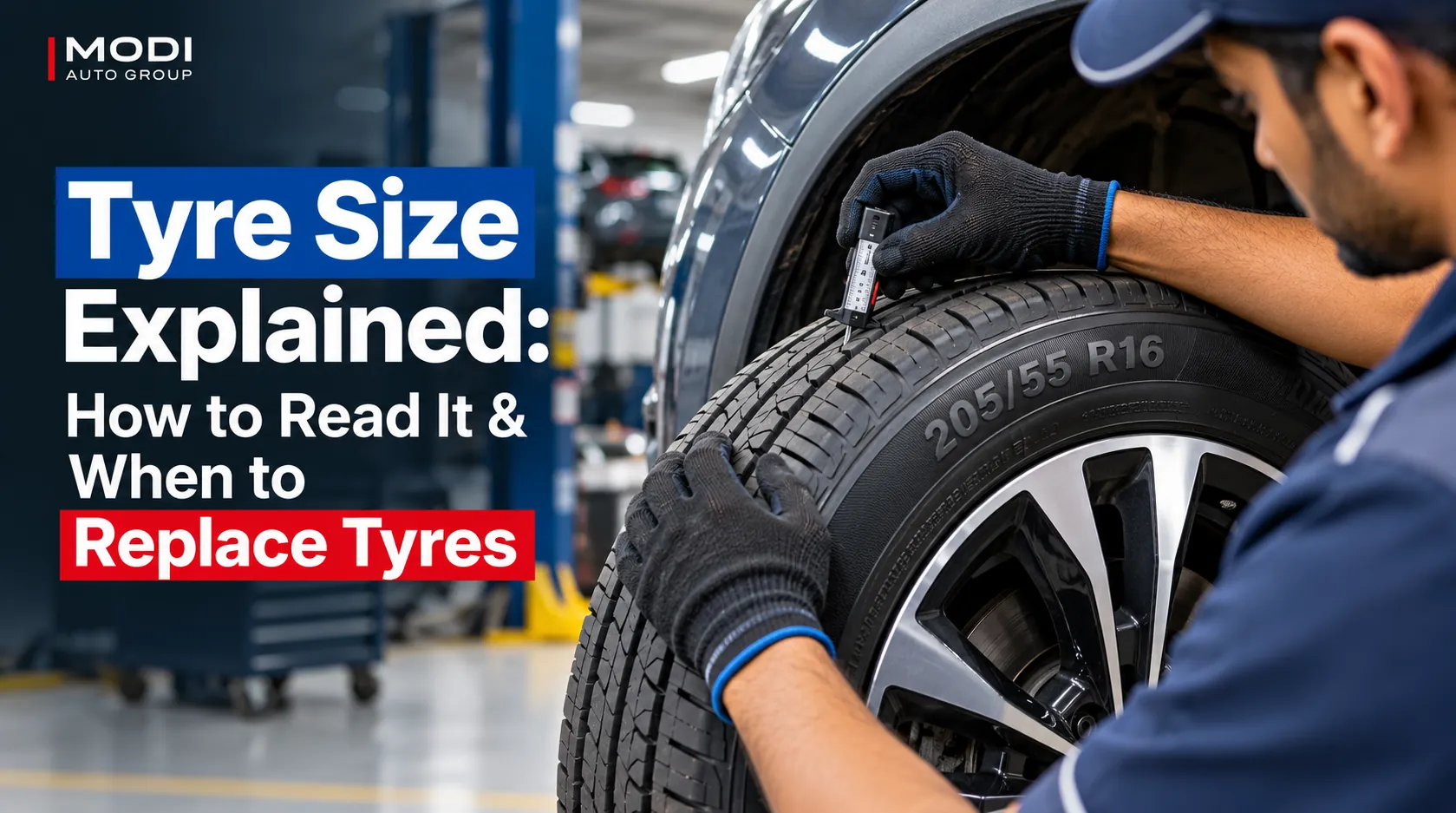
Tyre Size Explained: How to Read It and When to Replace Tyres
Look at the side of any car tyre and you will find a string like 215/60 R17 96H. Most drivers never give it a second glance until it is time to buy new tyres and the shop asks which size they need. Those numbers are actually a compact spec sheet, and understanding them helps you buy the right replacement, keep the correct pressure and know when a tyre has done its job.
1. Tyre Size Meaning: Decoding the Sidewall
Using 215/60 R17 96H as an example, here are the tyre measurements explained:
- 215: the tyre’s width in millimetres.
- 60: the aspect ratio. The sidewall height is 60% of the width, about 129 mm here.
- R: radial construction, used on virtually all modern cars.
- 17: the wheel (rim) diameter in inches.
- 96: the load index. A 96 rating means each tyre can carry up to 710 kg.
- H: the speed rating. H means the tyre is rated for up to 210 km/h.
Other markings worth knowing
- Manufacturing date: a four-digit code such as 2425 means the 24th week of 2025.
- Tread wear indicators (TWI): small raised bars inside the grooves that show when the tread is worn down.
- Tubeless: most car tyres today are tubeless.
- BIS mark: tyres sold in India must carry Bureau of Indian Standards certification.
2. Can You Change Your Tyre Size?
Many buyers like the look of bigger alloys and lower-profile tyres. It is possible, but the overall wheel diameter should stay close to the original, or the speedometer, ABS and ride quality can be affected. Stick to the sizes approved by the manufacturer, listed in the owner’s manual or on the door placard. Top variants often come with larger wheels and pricier tyres, which is worth considering when you choose the right car variant.
3. Tyre Pressure for Car Tyres: What Is Right?
The correct tyre pressure for your car is printed on a sticker on the driver’s door frame, inside the fuel flap or in the owner’s manual. For most passenger cars, it falls somewhere around 30 to 36 psi, sometimes with a higher figure for full loads. Always follow your car’s own recommendation rather than a general number.
- Check pressure when tyres are cold, ideally once a month and before long trips.
- Under-inflation wears the outer edges, builds heat and increases fuel consumption.
- Over-inflation wears the centre of the tread and reduces grip, especially on wet roads.
- Do not forget the spare tyre.
4. When to Change Car Tyres
Tread depth
Once the tread wears down to the level of the tread wear indicator bars (1.6 mm), the tyre should be replaced. In practice, grip in heavy rain drops well before that point, so many drivers in Mumbai replace tyres a little earlier ahead of the monsoon.
Age
Rubber hardens and cracks with time, even if the tread looks fine. Many tyre makers recommend a professional inspection once a tyre is five years old, and replacement well before it reaches ten years from its manufacturing date. Heat and sun exposure can shorten that.
Visible damage
Replace or inspect any tyre with sidewall cracks, bulges, deep cuts or exposed cords. A bulge in particular can lead to a sudden blowout.
Uneven wear or vibration
Wear on one edge usually points to alignment problems, while vibration at speed can indicate balancing issues or internal tyre damage.
5. How to Make Your Tyres Last Longer
- Rotate tyres at the interval recommended in your manual.
- Get wheel alignment and balancing checked regularly, and after hitting a deep pothole.
- Keep pressure correct, since it affects wear more than almost anything else.
- Avoid harsh braking and hitting kerbs.
Tyre checks, rotation and alignment are part of routine servicing at any authorised automobile dealership. You can book a car service through Modi Auto Group to get them done alongside your scheduled maintenance.
Also Read: Pre-Delivery Inspection Checklist: What to Check on Your New Car
Conclusion
The sidewall tells you a tyre’s width, profile, rim size, load capacity and speed rating, and the date code tells you how old it is. Keep tyres at the pressure on your door placard, watch the tread wear indicators, and replace tyres that are worn, damaged or simply too old. Good tyres matter more than almost any other part for grip and braking, especially on wet Mumbai roads.
For tyre checks and servicing, Modi Auto Group’s brand workshops, including Viva Honda, Modi Hyundai and MG Modi, can inspect your tyres and advise on the right replacement size.
Frequently Asked Questions
1. What does tyre size 215/60 R17 mean?
The tyre is 215 mm wide, its sidewall height is 60% of that width, it has radial construction, and it fits a 17-inch wheel.
2. What is the correct tyre pressure for a car?
It depends on the model. Check the sticker on the driver’s door frame or the owner’s manual. Most passenger cars fall around 30 to 36 psi.
3. When should I change my car tyres?
Replace them when the tread reaches the wear indicators, when there are cracks, bulges or cuts, or when the tyre is getting old, even if tread remains.
4. How do I check a tyre's manufacturing date?
Find the four-digit code on the sidewall. The first two digits are the week and the last two are the year, so 2425 means week 24 of 2025.
5. Can I fit bigger tyres on my car?
Only within the manufacturer’s approved sizes. Changing the overall diameter can affect the speedometer, ABS and handling.