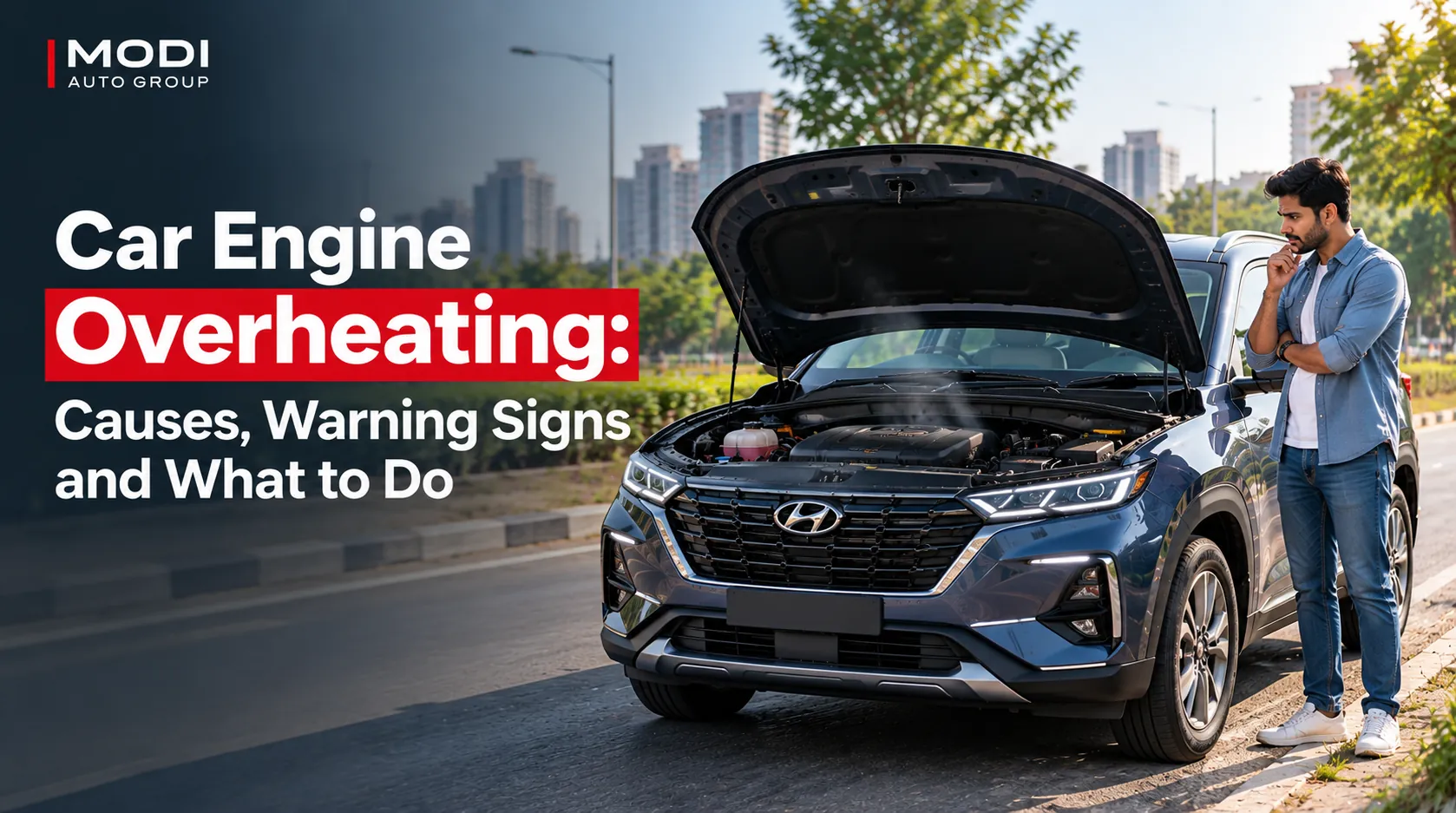
Car Engine Overheating: Causes, Warning Signs and What to Do
Car engine overheating rarely happens without warning. The temperature needle creeps up, a light flickers on the dashboard, or there’s a faint sweet smell from the bonnet. Catch those signs early and it’s usually a small, inexpensive fix. Ignore them and keep driving, and you could end up paying for major engine repairs.
In a city like Mumbai, where long traffic jams and summer heat push the cooling system hard every day, it pays to know what to look for. Below, we cover what actually makes an engine overheat, the warning signs to watch for, and what to do the moment it happens.
1. How Your Engine Stays Cool
Think of the cooling system as a loop. Coolant flows around the hot engine, picks up heat and goes to the radiator at the front of the car to cool off. Then it comes back for more.
A few parts keep that loop working. The water pump does the pushing. The thermostat acts like a gate, only letting coolant through to the radiator once the engine is warm. The radiator fan matters most in traffic, because when the car is barely moving, there’s no breeze to cool the radiator for it. Lose any one of these and the temperature starts climbing.
2. Common Car Overheating Causes
Low coolant or a leak
This is the number one reason. Hoses crack, clamps loosen and radiators develop pinhole leaks. A green or pink puddle under the car in the morning is a strong clue.
Faulty thermostat
If the thermostat sticks shut, coolant can’t get to the radiator at all. You can have a full reservoir and still watch the needle shoot up.
Radiator fan not working
In a manual, shift up early rather than revving the engine hard in low gears, without letting it labour at very low rpm. In an automatic, use Eco mode where available and avoid flooring the accelerator, which forces the gearbox to downshift. Our comparison of manual vs automatic cars for city traffic explains how each behaves in congestion.
Clogged radiator
Leaves, dust and road grime block the front of the radiator, while old coolant leaves deposits inside it. Either way, it can’t shed heat the way it should.
Water pump failure
Pumps wear out. Signs include coolant dripping near the front of the engine or a whining sound that rises as you rev.
Low engine oil
Oil does more than lubricate. It also carries heat away from the moving parts, so running low makes everything hotter.
Blown head gasket
This is usually the result of serious overheating rather than the cause. Once it fails, coolant leaks into places it shouldn’t. Look out for white smoke from the exhaust, coolant disappearing for no obvious reason, or oil that looks milky on the dipstick.
3. Warning Signs of Engine Overheating
- The temperature gauge climbing past its usual spot, or a red temperature light
- Steam from under the bonnet
- A sweet, syrupy smell, which is usually leaking coolant
- Coloured puddles under the car
- Ticking or knocking from the engine
- The car feeling weak, since some engines cut power to protect themselves
4. What to Do If Your Car Overheats
- Turn the AC off. Right away. It’s adding load to an engine that’s already struggling.
- Switch the heater to full hot, fan on max. Yes, in Mumbai heat. It pulls heat out of the engine and into the cabin, and it buys you time.
- Pull over somewhere safe and put the hazards on.
- Switch the engine off.
- Leave the radiator cap alone. The system is under pressure, and opening it hot can spray boiling coolant at you.
- Give it at least 30 minutes. Once it’s cool, check the coolant reservoir and top up with the right coolant. Plain water will do in an emergency, but get the system flushed and refilled properly afterwards.
- If the needle climbs again, stop driving. Call roadside assistance or get the car towed.
5. How to Fix an Overheating Car
Topping up coolant gets you home. It doesn’t fix anything. A proper workshop will pressure-test the cooling system to find leaks, then check the thermostat, fan, water pump and hoses one by one. If the engine got very hot, they should look at the head gasket too. Through Modi Auto Group, you can book a car service with your brand’s authorised workshop and get the actual cause found.
6. How to Prevent Overheating
- Check the coolant level every few weeks, with the engine cold.
- Replace coolant when your owner’s manual says to, not “whenever”.
- Keep the front of the radiator clean.
- Glance at the temperature gauge in heavy traffic, especially in summer.
- Don’t sit on small leaks or a fan that’s slow to start. They get worse.
One more Mumbai-specific point. In the monsoon, avoid driving through deep water. It’s a different problem from overheating, but water getting into the engine can wreck it, and that’s exactly why an engine protection add-on on your insurance is worth having here.
Also Read: Car Insurance Explained 2026: Comprehensive vs Third-Party
Conclusion
Nine times out of ten, overheating comes down to coolant, the thermostat, the fan, the radiator or the water pump. Keep an eye on the gauge. If it climbs, AC off, heater on, pull over, and never touch a hot radiator cap. Then get the cause properly fixed instead of topping up and hoping it doesn’t happen again.
For cooling system checks and repairs with genuine parts, Modi Auto Group’s workshops in Mumbai, including Viva Honda, Modi Hyundai and MG Modi, can find out what’s going on.
Frequently Asked Questions
1. What are the main reasons for car overheating?
Usually low coolant or a leak, a stuck thermostat, a dead radiator fan, a clogged radiator, a worn water pump or low engine oil.
2. What should I do if my car overheats?
AC off, heater to full, pull over safely and switch off. Let it cool for 30 minutes or more before checking coolant, and never open the cap while it’s hot.
3. Can I drive my car if it is overheating?
Better not. Driving on can warp engine parts or blow the head gasket. Stop, let it cool and call for a tow if it overheats again.
4. Why does my car overheat in traffic but not on the highway?
That points to the radiator fan. On the highway, moving air cools the radiator for you. In traffic, the fan has to do it alone.
5.Can I use water instead of coolant?
Only to get you out of a jam. Coolant protects against corrosion and boiling, so flush the system and refill it properly afterwards.