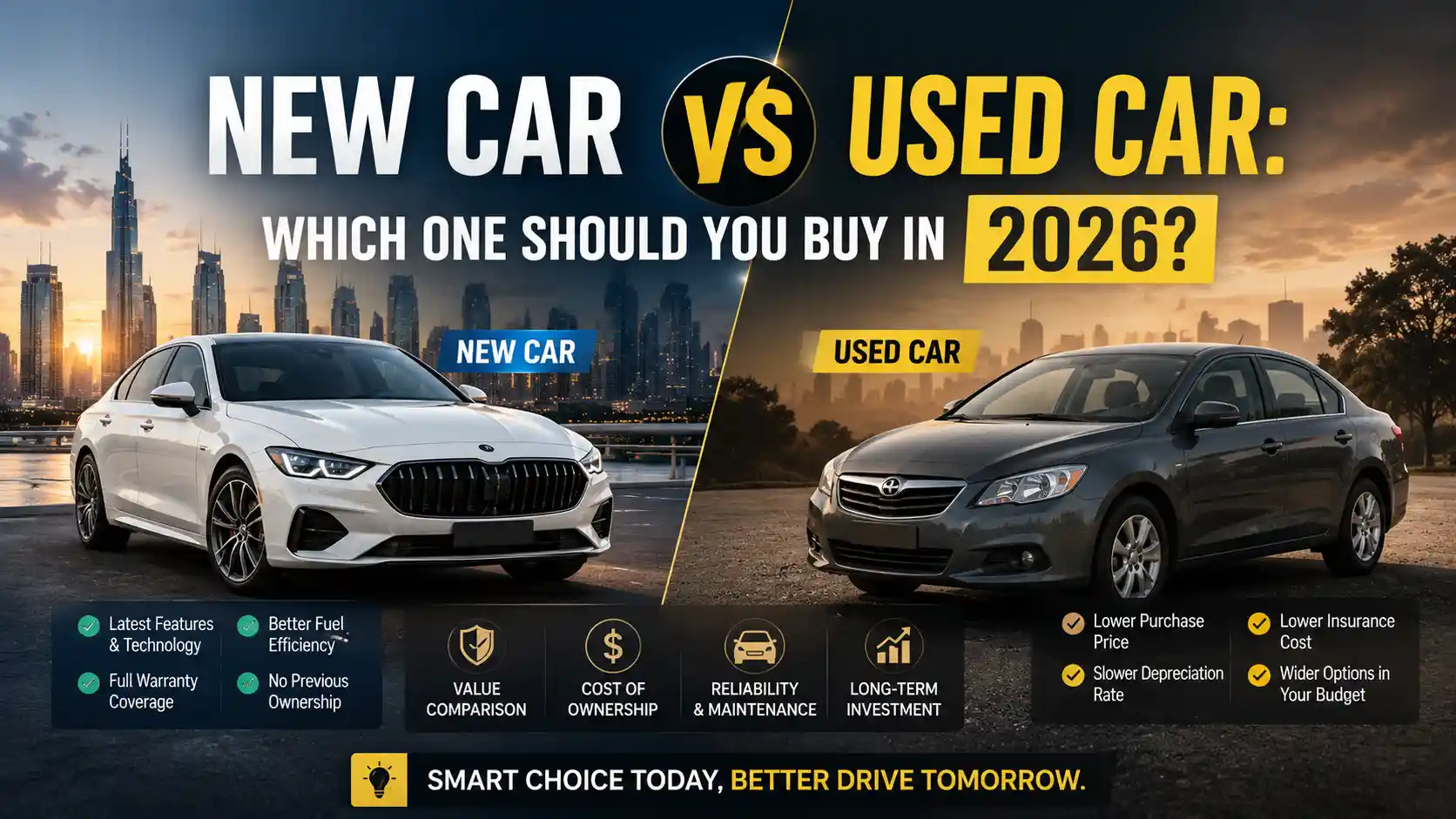
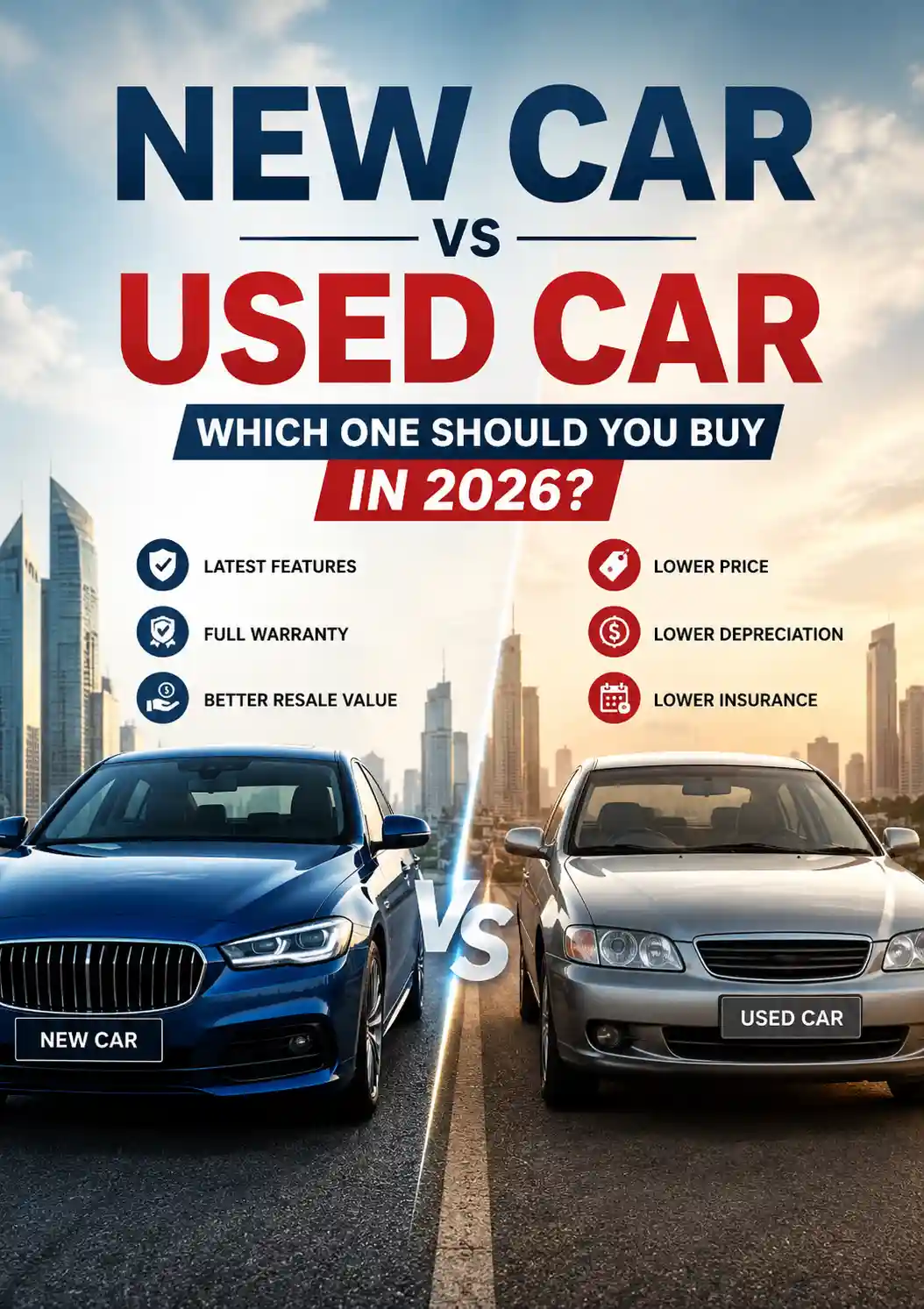
New Car vs Used Car: Which One Should You Buy in 2026?
If you’re stuck between a new car vs used car decision in 2026, the short answer is: a new car makes more financial sense than it did a year ago, but a used car still wins on upfront cost and slower depreciation. After GST 2.0 came into effect on 22 September 2025, small petrol and diesel cars now attract 18% GST (down from 28% plus cess), and most SUVs sit at a flat 40% slab without the older cess layers. This has narrowed the price gap between a new car and a pre-owned one, but it hasn’t closed it. Your choice ultimately depends on your budget, how long you plan to keep the car, and how much risk you want to take on resale value.
This guide breaks down the new vs used car debate the way an experienced dealer would explain it across the counter — covering price, finance, insurance, depreciation, warranty, and the hidden costs people forget until they’re standing at the RTO. By the end, you’ll know exactly which side of the new car vs second hand argument fits your situation.
New Car vs Used Car: The Quick Answer for 2026 Buyers
Before we go deep, here’s a one-line verdict for the four most common buyer types in India today:
- First-time buyer with a budget of ₹6–8 lakh: A certified pre-owned car gives you a bigger, better-equipped vehicle. Used wins.
- Family upgrading from a hatchback to an SUV: A new car under the revised GST is now closer to a 2–3-year-old used SUV. New is tempting.
- Buyer who changes cars every 3 years: You’ll absorb most of the depreciation. Used makes more sense, every time.
- Buyer who keeps a car for 8–10 years: A new car spreads depreciation over a longer life and gives you full warranty. New wins.
If none of those describe you exactly, keep reading — the rest of this old car versus new car comparison walks through every cost line item so you can make the call with confidence.
Picking your top SUV under 20 lakh is the fun part. Buying it shouldn’t be painful.
Also Read:
Modi Auto Group
we are an authorised dealership for Hyundai, Honda, MG, and Kia across Mumbai and Pune. Whether your shortlist has the Creta, Seltos, Elevate, Hector, or any other SUV from this list, our team can line up test drives, walk you through variants honestly, and help you land the right deal. No pressure, no upselling — just straight talk.
Upfront Price: Where the New vs Used Car Gap Really Sits
The on-road price is usually the deciding factor for Indian buyers, and 2026 has shifted the math in a meaningful way.
New car prices after GST 2.0
Under GST 2.0, a small petrol or diesel hatchback that earlier cost around ₹8.5 lakh on-road now sits closer to ₹7.6–7.8 lakh, depending on the state. Mid-size SUVs have also seen a 6–10% reduction at the showroom level. That said, on-road price = ex-showroom price + GST + road tax + registration + insurance, and road tax and insurance still add 12–18% on top of ex-showroom in Maharashtra. So a sticker drop doesn’t translate one-to-one to your final cheque.
Used car prices in 2026
A well-maintained 2–3-year-old car typically sells for 30–45% less than its original on-road price. A 2023 Hyundai Creta that cost ₹17 lakh new can be picked up for around ₹12 lakh today from a certified pre-owned dealer. For dealer transactions, GST applies only to the dealer’s profit margin, not the full selling price — and individual-to-individual sales are GST-free. That keeps the second hand cars vs new car price gap meaningful even after GST 2.0.
Depreciation: The Biggest Hidden Cost in the New vs Used Car Debate
Depreciation is the single biggest reason financial advisors lean toward used cars. A new car loses value the moment you drive it out of the showroom — and that loss is invisible until you try to resell.
Here’s the standard depreciation curve for a typical Indian passenger car:
- Year 1: 15–20% loss
- Year 3: 30–40% loss
- Year 5: 50–55% loss
- Year 7: 60–70% loss
A buyer picking up the same car at the 3-year mark skips the steepest section of that curve. Their further loss over the next two years is typically 15–18% of the purchase price, not 30%. This is why repeat buyers and people who change cars often consistently choose used. The first owner funded the depreciation cliff; the used buyer rides the gentle slope.
Finance and EMI: How Loans Differ for New and Used Cars
Car loans behave very differently depending on whether you’re buying new or pre-owned, and in 2026 the gap has actually widened slightly.
New car loans
- Interest rates: 8.5%–9.75% (floating, top-tier banks)
- Tenure: up to 7 years
- LTV: 85–100% of on-road price
- Processing fees: typically waived during festive offers
Used car loans
- Interest rates: 11.5%–14.5% (banks usually charge a 2–4% premium)
- Tenure: capped at 5 years (and often based on how old the car already is)
- LTV: 70–80% of valuation, not asking price
- Processing fees: rarely waived
So while a used car saves you on price, a chunk of that saving can leak back through higher EMI interest if you finance it. Run the numbers on both sides before deciding. If you’re financing, our team can help you compare new and used car loan offers from multiple lenders side by side.
Insurance Costs: New vs Used Car
Insurance is calculated on Insured Declared Value (IDV), which roughly tracks the current market value of the car. Since a new car has a higher IDV, it costs more to insure.
Indicative annual comprehensive premiums for a mid-segment sedan:
- Brand new (year 1): ₹28,000–₹38,000
- 3 years old: ₹14,000–₹20,000
- 5 years old: ₹10,000–₹14,000
That’s a difference of roughly ₹15,000–₹20,000 per year in favour of the used car. Over a 5-year ownership period, you could save close to ₹75,000 on insurance alone.
Warranty, Service and Peace of Mind
This is where new cars pull ahead clearly. A new car comes with a manufacturer’s warranty (typically 3 years/1,00,000 km, extendable to 5 years), free scheduled services, and zero history of accident damage or odometer rollback.
A used car, even a certified one, carries inherent uncertainty. A reputable dealer will offer:
- A 100–140 point inspection
- A 1-year limited warranty
- Verified service history and ownership records
- Engine and transmission cover
If you’re considering pre-owned, never buy from a roadside seller without paperwork. A certified used car from a trusted dealership like Modi Pre-Owned Cars gives you most of the warranty comfort of a new car at significantly lower cost.
Resale Value: Looking Three Years Ahead
Resale is where the new versus used car decision gets interesting. The same model behaves very differently in your hands depending on when you bought it.
If you buy new and sell after 3 years, you typically recover 60–70% of your ex-showroom price. If you buy a 3-year-old car and sell it after another 3 years, you typically recover 65–75% of what you paid. The percentage is similar, but the absolute rupee loss on the new car is much larger because the base price is higher.
Brands like Maruti Suzuki, Toyota, Hyundai and Honda hold their value better than most. Premium brands and EVs (outside of a few exceptions) tend to depreciate faster, which makes them risky as new buys but excellent value as used ones.
When You Should Buy a New Car
A new car is the smarter choice in these situations:
- You plan to own the car for 7+ years and want full warranty coverage
- You want the latest safety features — six airbags, ADAS, electronic stability, 360° cameras
- You’re buying a small petrol/diesel car where post-GST-2.0 pricing has narrowed the gap
- You qualify for festive cashback, exchange bonus, or corporate discounts that knock another ₹40,000–₹80,000 off
- You want a fixed EMI structure, a clean ownership record, and zero history risk
If that sounds like you, explore the latest new car options at Modi Auto Group across Honda, Hyundai, MG, Kia, Jaguar Land Rover and Tata.
When You Should Buy a Used Car
A used car is the smarter choice in these situations:
- You want more car for your money — a 3-year-old SUV instead of a new hatchback at the same price
- You change cars every 2–3 years and don’t want to absorb fresh depreciation each time
- You’re a first-time driver who’d prefer to learn on a car you’re not afraid to scratch
- You want to avoid stretching a loan or locking up a large down payment
- You’re buying an additional family car, not your primary one
In all of these cases, the second hand cars vs new car math works in favour of pre-owned — provided you buy from a certified source with proper documentation.
Common Mistakes Buyers Make in the New vs Used Car Decision
- Comparing only ex-showroom prices and ignoring road tax, insurance and registration
- Forgetting that used car loan interest rates are 2–4% higher than new car loans
- Buying a used car privately to save GST and ending up with no warranty, no inspection and no recourse
- Choosing a luxury used car without budgeting for spare parts and service costs
- Stretching to the top of the budget on a new car and skipping a comprehensive insurance upgrade
Make the Smarter Choice With Expert Guidance
There’s no universal winner in the new car vs used car debate — only the right answer for your budget, lifestyle and ownership horizon. The team at Modi Auto Group has been guiding car buyers across Mumbai and Pune for over four decades, and we deal in both new vehicles (Honda, Hyundai, MG, Kia, JLR, Tata) and certified pre-owned cars.
Want a personalised recommendation? Get in touch with our advisors, or visit any Modi Auto Group showroom in Mumbai or Pune for a test drive and a transparent walk-through of new and used options side by side.
Frequently Asked Questions
1. Is it better to buy a new car or a used car in 2026?
It depends on how long you plan to keep the car. For ownership periods of 7+ years, a new car offers better warranty coverage and lower service worries. For 2–4 year horizons, a used car saves you the steepest part of the depreciation curve. After GST 2.0, the price gap has narrowed for small cars, but used cars still win on resale economics.
2. How much does a new car depreciate in the first year in India?
A new car typically loses 15–20% of its value in the first year, with another 10–15% drop in the second year. By year three, you’ve absorbed roughly 30–40% of the ex-showroom price as depreciation, which is exactly the slope a pre-owned buyer avoids.
3. Are used car loan interest rates higher than new car loans?
Yes. Used car loans in India typically carry interest rates of 11.5%–14.5%, compared to 8.5%–9.75% for new car loans. Tenure is also shorter (5 years vs 7 years) and the loan-to-value ratio is lower (70–80% vs 85–100%), so the EMI advantage of a used car isn’t as large as it looks on the sticker.
4. Did GST 2.0 make used cars less attractive?
Slightly, but not enough to flip the decision for budget buyers. GST 2.0 reduced new car prices by 6–12% for small cars and SUVs, narrowing the gap. However, used cars still win on insurance cost, slower depreciation, and lower upfront outlay — especially for buyers under ₹10 lakh.
5. What's the safest way to buy a second-hand car in India?
Buy from a certified pre-owned dealer that offers an inspection report, RC verification, ownership history, and at least a 1-year limited warranty. Avoid cash transactions with private sellers unless you can independently verify service records and run a Vahan check on the registration.
6. Do new cars come with better safety features than used ones?
Generally, yes. Post-October 2025 norms in India require six airbags as standard on most passenger cars, and ADAS features are now common in mid-segment models. A 3–5 year old used car may lack these, which matters more if you have young children or do long highway drives. Compare feature lists carefully before deciding.