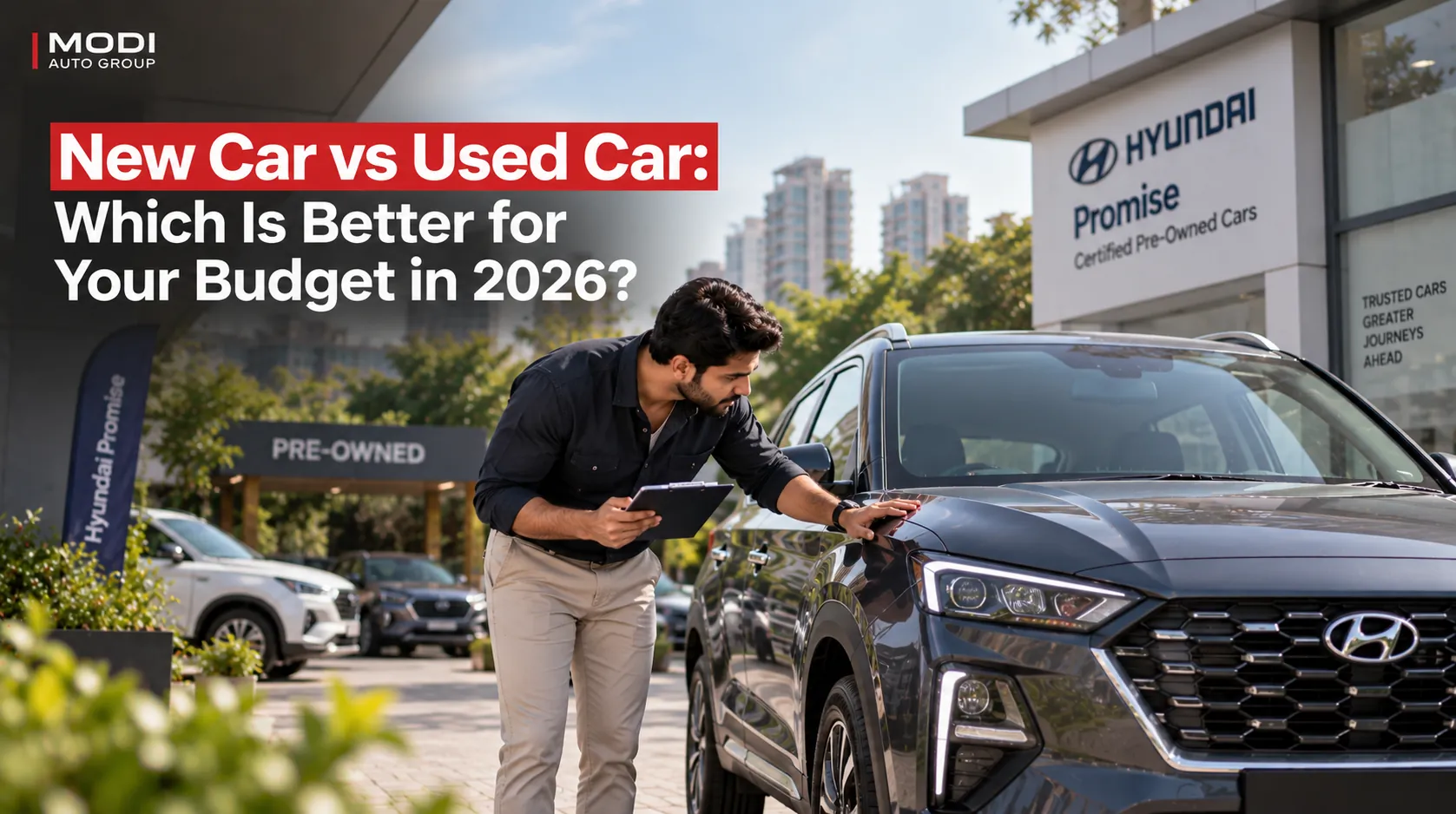
New Car vs Used Car: Which Is Better for Your Budget in 2026?
Should I buy a new or used car? It’s the question every buyer eventually asks, and the new-versus-used debate rarely has a single right answer, and anyone who tells you otherwise is probably speaking from their own situation rather than yours. The right choice depends on how long you plan to keep the car, how much upfront cash you have, and how much you value warranty cover and the latest features versus a lower purchase price.
The case for a new car
A new car comes with a full manufacturer warranty, the latest safety and infotainment features, no unknown history to worry about, and financing options that are usually easier and cheaper to access than used-car loans. You’re also the only owner, which matters for resale value later. The trade-off is straightforward: you pay a premium for all of this, and the car depreciates fastest in its first year or two of ownership.
The case for a used car
A used car, particularly one that’s two to four years old, has already absorbed the steepest part of its depreciation curve, so you get meaningfully more car for the same budget. Understanding used cars cost beyond the sticker price, insurance, maintenance and financing, is what actually decides whether buying used saves you money. A certified pre-owned car from an authorised dealer typically comes with some warranty cover and a verified service history, which reduces a lot of the risk associated with buying used. Every automobile dealership under Modi Auto Group can point you to Modi Cars for certified pre-owned options with this kind of verified history.
Total cost of ownership matters more than sticker price
It’s tempting to compare new and used purely on purchase price, but total cost of ownership tells a more complete story. A used car might have a lower price tag but higher maintenance costs if it’s out of warranty, while a new car’s higher upfront cost is offset by lower repair costs and included service packages in the early years. Factor in insurance too: new cars often carry higher premiums initially, which narrows the gap somewhat.
Questions worth asking yourself
- How long do you plan to keep this car? Two years, or eight?
- Do you have the cash flow to absorb an unexpected repair on an out-of-warranty used car?
- Is having the latest safety tech and features a priority, or is that secondary to price?
- Would a certified pre-owned car from an authorised dealer bridge the gap between the two options?
Conclusion
New cars offer certainty, warranty and the latest features at a higher price; used cars offer more car for your money at the cost of some unknowns and a shorter warranty runway. There’s no universally better option: only the one that fits your budget, how long you’ll keep the car, and how much risk you’re comfortable with. Whichever way the new vs second hand car decision goes for you, it comes down to budget, timeline and how much risk you want to carry.
Whether you’re learning new or considering a certified pre-owned option, Modi Auto Group’s brand showrooms across Mumbai (Viva Honda, Modi Hyundai, Modi Cars and MG Modi) can walk you through both, so you can compare them side by side before deciding.
Frequently Asked Questions
1. Is it better to buy a new car or a used car?
It depends on your budget, how long you plan to keep the car, and how much you value warranty cover and the latest features. New cars offer certainty and full warranty; used cars offer more value per rupee spent.
2. How much cheaper is a used car compared to a new one?
Used cars, especially those two to four years old, have already absorbed the steepest depreciation, often making them significantly cheaper than an equivalent new model, though the exact gap varies by make and model.
3. Is a certified pre-owned car a safer used car option?
Generally yes. Certified pre-owned cars from authorised dealers typically come with a verified service history and some residual warranty cover, reducing much of the risk associated with buying used.
4. Does a used car cost more to maintain than a new one?
It can, particularly once the original manufacturer warranty has expired, since repair costs then fall entirely on the owner rather than being covered.
5. What should I compare besides purchase price when choosing new vs used?
Look at total cost of ownership, including insurance, maintenance, warranty cover and financing costs, rather than comparing purchase price alone.